In this guide
What a strong review reply does
- Names the issue instead of hiding behind generic apologies.
- Offers a next step or status update the user can act on.
- Protects public trust even when the user never edits the rating.
- Stays concise enough to work inside store reply constraints.
1. Principles before templates
Before you copy any template, hold onto four rules. First, acknowledge the exact problem. Second, do not promise what your team cannot actually deliver. Third, keep the reply in the same language as the review. Fourth, do not turn the public thread into a debugging session.
Those rules matter more than any wording trick. Users can tell when they are getting an empty politeness pattern. The goal is to reduce frustration and protect trust, not to win the conversation.
2. Five review reply examples you can adapt
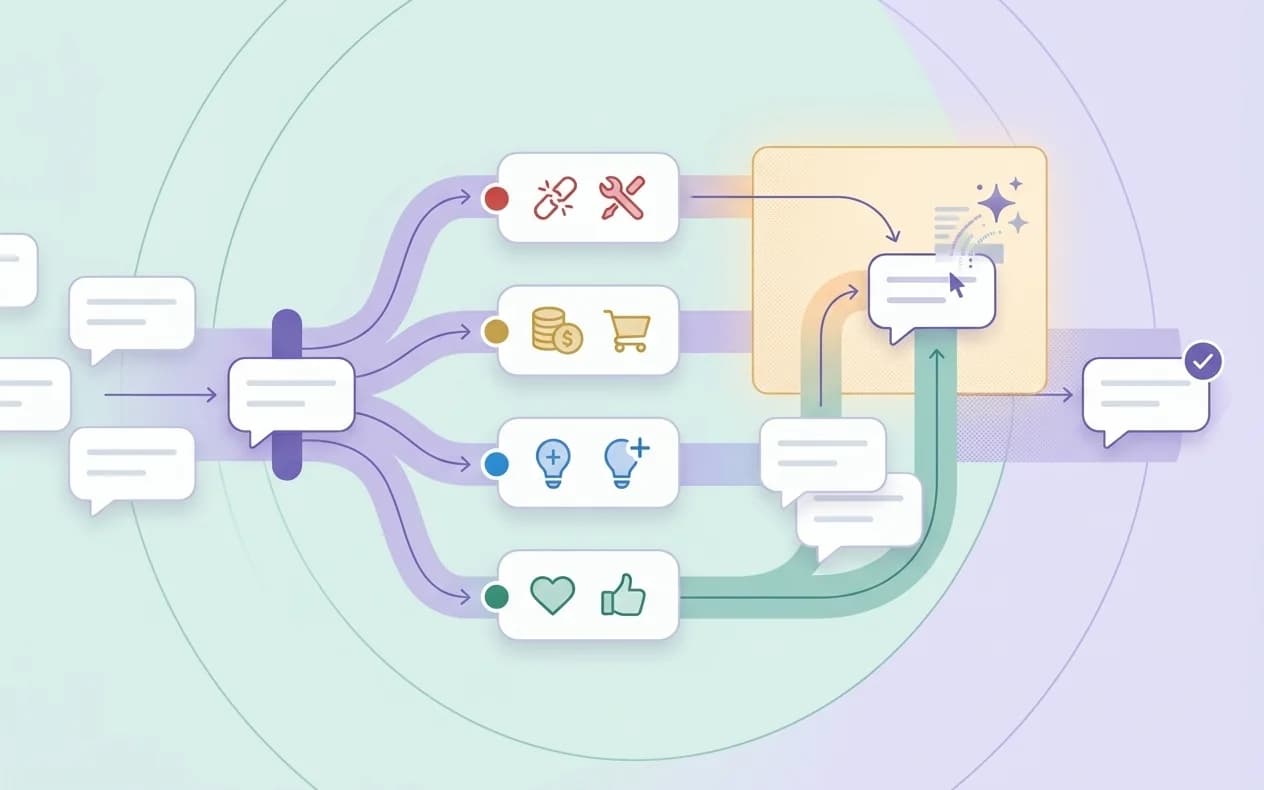
1-star bug complaint
Thanks for flagging this. We are sorry the latest version crashed during onboarding. Our team is investigating the issue now. If you update to the newest build and it still happens, please contact us through in-app support so we can review your device details directly.
Billing or subscription frustration
Sorry about the confusion here. Subscription and refund handling can differ by store, so we want to check your case properly. Please reach out through support with the purchase email or order reference and we will review the status with you.
Feature request from a frustrated user
Thanks for being direct about what is missing. We understand why this feature matters to your workflow. We have shared your request with the product team, and if you want to add more detail, our support channel is the best place to send specific use cases.
Positive review worth reinforcing
Thank you for the kind review. We are glad the app is helping with your workflow, and we really appreciate you calling out the offline mode. Feedback like this helps our team know which parts of the product are landing well.
Low rating with almost no detail
Sorry to hear the app did not meet expectations. We would like to understand what went wrong and how we can improve it. If you are open to it, please contact us through support and share a bit more detail about the issue you ran into.
3. How to use AI without sounding robotic
AI should give you a strong first draft, not a final voice. The way to keep replies human is to feed the system the review context, decide on the operational goal, and then edit the response before sending. Remove fake empathy, remove filler, and add specifics where the user actually needs them.
This is why a tool-backed workflow matters more than a generic prompt. Our AI review management guide and the new Lite ASO review reply system focus on exactly that gap.
4. Common mistakes that make review replies worse
The most common mistake is defensiveness. The second is vagueness. The third is asking the user to do too much work in public. Reply as if other future users are reading, because they are.
- Do not paste the same apology under every complaint.
- Do not promise timelines or refunds you cannot control.
- Do not blame the user, the device, or the store in public.
If your team needs a reusable process instead of scattered macros, connect the examples to a real workflow and approval path. That is where the time savings show up.
Frequently asked questions
Not necessarily, but you should respond consistently to low ratings, issue reports, and strategically important feedback. Those replies do the most to protect trust.
The tone can be similar, but each reply should still match the review details, the language of the review, and the relevant store constraints.
Usually yes. A short specific reply is more trustworthy than a long generic one. The job is to acknowledge, guide, and de-escalate.
Yes, but the templates work best when AI starts from real review context and the team still reviews the message before publishing.
Stop replying with copy-paste macros
Use Lite ASO to turn review reply examples into a real workflow with live context, draft support, and faster response handling.